
Farm Safety Week 2026: 5 Small Changes That Can Make Your Farm Safer
Marking Farm Safety Week with practical steps to reduce everyday risks.
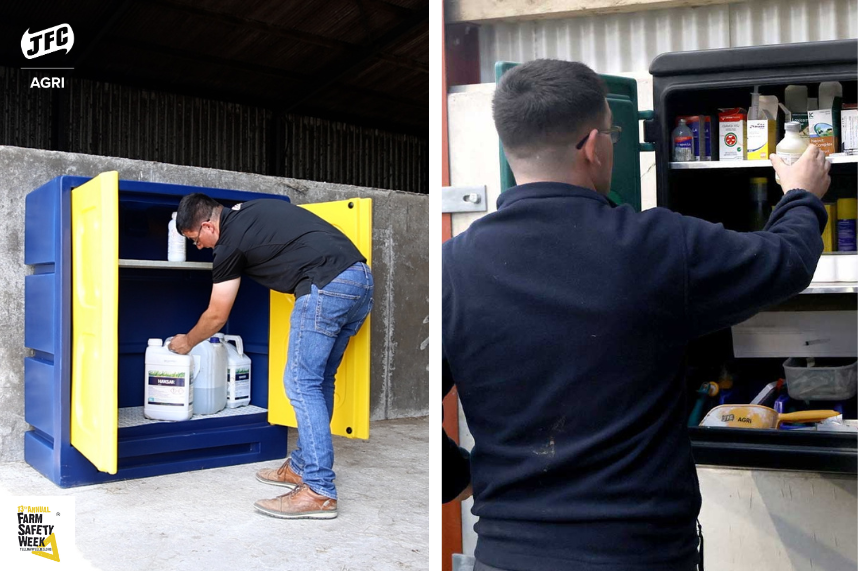 Farm Safety Week took place from July 20th to 24th this year, reaching out to farmers and agricultural organisations throughout Ireland and the UK to promote safer choices on farms.
Organised by the Farm Safety Foundation, also known as Yellow Wellies, the campaign returned for its 14th year with a focus on the people affected by farm accidents. It encourages farmers to pause, review how work is carried out, and identify changes that could prevent serious injury.
At JFC, we support Farm Safety Week and understand that safety must be considered when developing products for working farms. While no singular product can replace safe practices, proper training, and good judgement, practical changes help remove hazards and reduce risk.
Here are five safety steps worth considering on your farm.
1. Store Chemicals Securely
Agricultural chemicals should be kept in their original labelled containers and stored in a secure, designated area. Our lockable Chemical Storage Cabinets help prevent unauthorised access while keeping potentially hazardous substances organised and separated from general farm supplies.
2. Keep Medicines Out of Reach
Veterinary medicines need to be stored securely and according to their individual instructions. Our Medi-Safe range provides lockable storage to keep medicines organised and out of the reach of children.
3. Reinforce Farm Hygiene
People can unknowingly carry dirt and infectious material between different areas of a farm on their footwear. Our Personnel Footbaths used with the correct disinfectant and maintained properly can form part of the farm’s biosecurity measures.
4. Make Temporary Hazards Visible
Hedge cutting, livestock movement, and maintenance work are necessary to improve farm safety, but can create additional risks around entrances and roadways. Our Traffic Cones can help make work areas and temporary hazards more visible to drivers, workers, and visitors.
5. Carry Out a Farm Safety Audit
Take time to walk through the farm and note anything that could cause an accident. Check machinery, yards, buildings, and electrical equipment, livestock areas, and access routes. Note each issue, decide what action is required, and address the highest-risk items first.
Farm safety doesn’t always depend on major changes. A secured cabinet, clearly marked work zone, or hazard identified before work begins, could prevent a far more serious incident.
For more information on any of the products mentioned above or details on our broader Agri range, visit our website or get in touch with the JFC Agri team.